
The aviation authority is concerned about financial health of Air India, Spicejet and Jet Airways.

Government sources said the airline is already considering the proposal and negotiations are likely to begin soon.
The domestic aviation industry is expected to report a net loss of Rs 25,000-26,000 crore this fiscal with elevated jet fuel prices and fare caps continuing to pose a major challenge for the airlines' profitability, domestic rating agency ICRA Ltd said on Thursday. The domestic airlines, however, are likely to post a reduced net loss of Rs 14,000-16,000 crore in the next financial year on the back of a "notable recovery" in air passenger traffic and lower level of debt, ICRA said. The ratings agency also estimates that the industry will require an additional funding in the range of Rs 20,000-22,000 crore during FY22-FY24.
'Earlier, when they were selling tickets at Rs 1,000, a family of five could travel by flight.' 'When it comes to realistic pricing and the price becomes Rs 5,000, a family of five will have shell out Rs 25,000.' 'How many will be able to afford that?' 'You will see people switching back to train travel which is more realistic.'
Govt's decision to allow in-flight Wi-Fi doesn't take off with budget airlines, full-service carriers enthused

Days after low-cost carrier AirAsia announced it would launch its India operations by the end of the year, IndiGo Airlines President Aditya Ghosh, 38, tells Sudipto Dey in an interaction why his airline is not one that should be worried.
Aviation industry experts expect the ATF prices to fall by 16 per cent in November, compared with the current month. This, they say, translates into bridging of nearly half the gap between the airlines' operational costs and total revenues.
Jet fuel prices on Saturday were hiked by a marginal 0.2 per cent -- the eighth straight increase this year -- to an all-time high, reflecting a surge in global energy prices. The price of aviation turbine fuel (ATF) -- the fuel that helps aeroplanes fly -- was hiked by Rs 277.5 per kilolitre, or 0.2 per cent, to Rs 113,202.33 per kl (Rs 113.2 per litre) in the national capital, according to a price notification of state-owned fuel retailers. Meanwhile, petrol and diesel prices remained unchanged for the 10th straight day after rising by a record Rs 10 per litre each.

In Mumbai, jet fuel costs Rs 71,940.36 per kl as against Rs 73,306.89 per kl previously, IOC said.
As all airlines have raised carriage charges, private couriers have increased their tariffs 8-20 per cent. India Post, on the other hand, has not tinkered with its tariffs at all. As a result, India Post's tariff is 70 per cent cheaper for domestic destinations and 30 per cent cheaper for international destinations.

The major US indexes pared losses late in the session.

'Earnings will be the catalyst for markets to march higher from here on out.'

Zudio was the standout performer as it tapped into the pentup demand in small-town India, at a pace never seen before, notes Indrajit Gupta, co-founder and director, Founding Fuel.

If the government is asking a maximum price for Air India but asks to keep old personnel, it will not match.

Flight AI173 from Delhi was diverted to Magadan in Russia on Tuesday owing to an engine glitch, the Tata Group-owned private carrier said in a statement.

The national carrier, which is already struggling with its fuel payments, spends Rs 6,000-7,000 crore annually on fuel. A 10 per cent hike in crude price would mean over Rs 50-58 crore of extra costs for the airline.
According to the formula being worked out, the company would raise the fuel charge by Rs 50 for every Rs 1,000-per-kilolitre increase in the rates of jet fuel. Inversely, there would be a slide in the fares by the same amount in case of a Rs 1,000-per-kl decrease.
GoAir recently introduced return zero fare tickets under 'GoHappy Fares' plan, while low-cost arm of Air India, Air India Express offered domestic travellers a fare of Rs 99 plus taxes. Air Deccan, which has been taken over by Kingfisher Airlines and Spicejet are already in the race offering such sops. For AI Express, which has been primarily operating on international routes, this is an effort to reach out to the domestic market.

Railways has made windfall gains with the introduction of dynamic fares in the special Rajdhani type trains in the Delhi-Mumbai sector, which saw up to a 30 per cent jump in fares in AC-2 and 35 per cent in AC-3.

In addition to that, an increasing number of airlines like SpiceJet, national carrier Air India and GoAir are either getting into hedging of aviation turbine fuel or increasing the quantum of ATF hedged on the MCX. Last month, state-run Indian Oil Corporation approached MCX to provide it with a platform to hedge its refinery margins and end products from crude oil.

On a busy corporate route like Delhi-Mumbai, hand luggage fare can be cheaper by at least Rs 500-Rs 800.
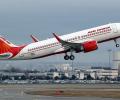
The government has notified the agreement between Air India and special purpose vehicle AIAHL for the transfer of non-core assets, ahead of the national airline's takeover by the Tata Group. The government had in October last year, inked the share purchase agreement with the Tata Group for the sale of national carrier Air India for Rs 18,000 crore. The Tata Group is expected to take full control of the airline, it founded in 1932, on Thursday. The cash component of the deal would come once the handover process is completed. The Tata Group would pay Rs 2,700 crore cash and take over Rs 15,300 crore of the airline's debt.

"Financial bids for Air India disinvestment received by Transaction Adviser. Process now moves to concluding stage," DIPAM Secretary Tuhin Kanta Pandey tweeted.

The rupee depreciation will work in favour of students who are currently studying in the US and plan to secure a job that pays in dollars.
Weighed down by surging jet fuel prices, Air-India's net profit plunged by a huge 82.54 per cent at Rs 16.29 crore (Rs 162.9 million) for the year 2005-06.

Only the top 5 per cent profit makers account for 75 per cent of profits.

At the recently concluded Dubai airshow, Akasa, Rakesh Radheyshyam Jhunjhunwala's new airline, signed a $9 billion deal with American aircraft maker Boeing to buy its 737 MAX planes and a $4 billion one for engines with CFM, a joint venture between GE of the US and Safran of France. Unlike his financial doppelganger Warren Buffett, who divested billions from his airline stock portfolio at the start of the pandemic, Jhunjhunwala is wagering his billions in a brand new airline. The legendary investor bought a roughly 40 per cent stake in SNV Aviation in September, Akasa's holding company, started in March by three former Jet Airways colleagues. With aviation still to recover from its pandemic slump, the big question around his foray into domestic aviation, due to take off in summer 2022, is whether it is another pie in the sky.
The state-run oil firms will raise jet fuel price by Rs 1,338 per kl effective midnight tonight, an Indian Oil official said on Thursday.
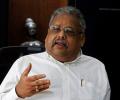
In the season of aviation action, Rakesh Jhunjhunwala-backed Akasa Air has secured the crucial no-objection certificate (NoC) from the civil aviation ministry. It expects to start operations next summer. The airline will now have to apply for the Directorate General of Civil Aviation for operations permit. Aviation sector has been in the limelight with the Tata Group winning the Air India bid last week.
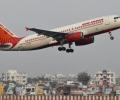
No other corporate house in India is in a better position than Tata group for the takeover of debt-laden airline Air India, former deputy chairman of erstwhile Planning Commission Montek Singh Ahluwalia said on Thursday. Tata Sons has emerged as the top bidder for the takeover of the state-run airline but the bid is yet to be approved by a group of ministers headed by Home Minister Amit Shah. "You can't have a better corporate, with a better position than the Tatas, we can hand it (state-run airline Air India) over," he said while replying to a question in a virtual event.

Indian and global carriers are offering limited period discounted fares to attract flyers from New Delhi on the occasion of the 68th Independence Day.

Tata Group-owned Air India has informed the Centre that aircraft lessors wish to set up their special purpose vehicles (SPVs) outside India since they aren't enthused about the Indian 'legal structure' and are loath to take risks. Indian airlines have a combined fleet of about 700 planes; over 85 per cent are on lease. A majority of lessors are based in Ireland due to its attractive tax policy, light-touch regulations, and swift legal system.

A consortium of lenders led by State Bank of India (SBI) has agreed to provide loans to Tata Group for the smooth operations of loss-making Air India. Tata Group, which won the bid to acquire the national carrier along with Air India Express and 50 per cent stake in AISATS in October last year, is expected to formally takeover the airline on Thursday. Sources said the SBI-led consortium has agreed to grant both term loans and working capital loans depending on the airline's requirements. All large lenders, including Punjab National Bank, Bank of Baroda, and Union Bank of India, are part of the consortium, they added.

In a bid to incentivise its staff and improve their performance, Air India may soon offer them employee stock options (ESOPs). The erstwhile national carrier, which was acquired by the salt-to-steel conglomerate Tata Group last year, will be the second company in the Group to have an ESOP policy. Tata Motors is the other Group company with an ESOP policy, which was implemented in 2018.
Tata Sons has started the process of due diligence of state-owned Air India and its subsidiary Air India Express. Sources said the group has appointed Bain and Company and Seabury Group for this purpose. Once complete, a financial bid will be submitted and a deal to take over the airline is likely to fructify by end of this year or even earlier, people involved in the process said. Simultaneously, the group has brought in veterans in the aviation business from Delta and United Airlines to prepare a plan for post-merger integration of Air India with its existing airline ventures. Tata Sons operates Vistara - a 51:49 percent joint venture with Singapore Airlines and Air Asia India, in which Tatas hold 83.67 per cent stakes.
